


Sopot has a reputation that says surprisingly little about what it is actually like to live there. A few hundred metres of Monciak and several weeks of summer have overshadowed everything else — including the fact that more than 60% of the city consists of green spaces and that its status as a health resort has protected this character by law since 1999. For the premium property market, this is a more compelling argument than any view from a window — but more on that at the end, because the answer changes the meaning of everything you will have read before it.
This article is about that other, larger part of Sopot. About the places residents visit and the regulations that ensure those places will still be there ten years from now. If you are looking for a premium property in Sopot as a second home rather than a weekend destination, you will find here knowledge that no property listing can provide.
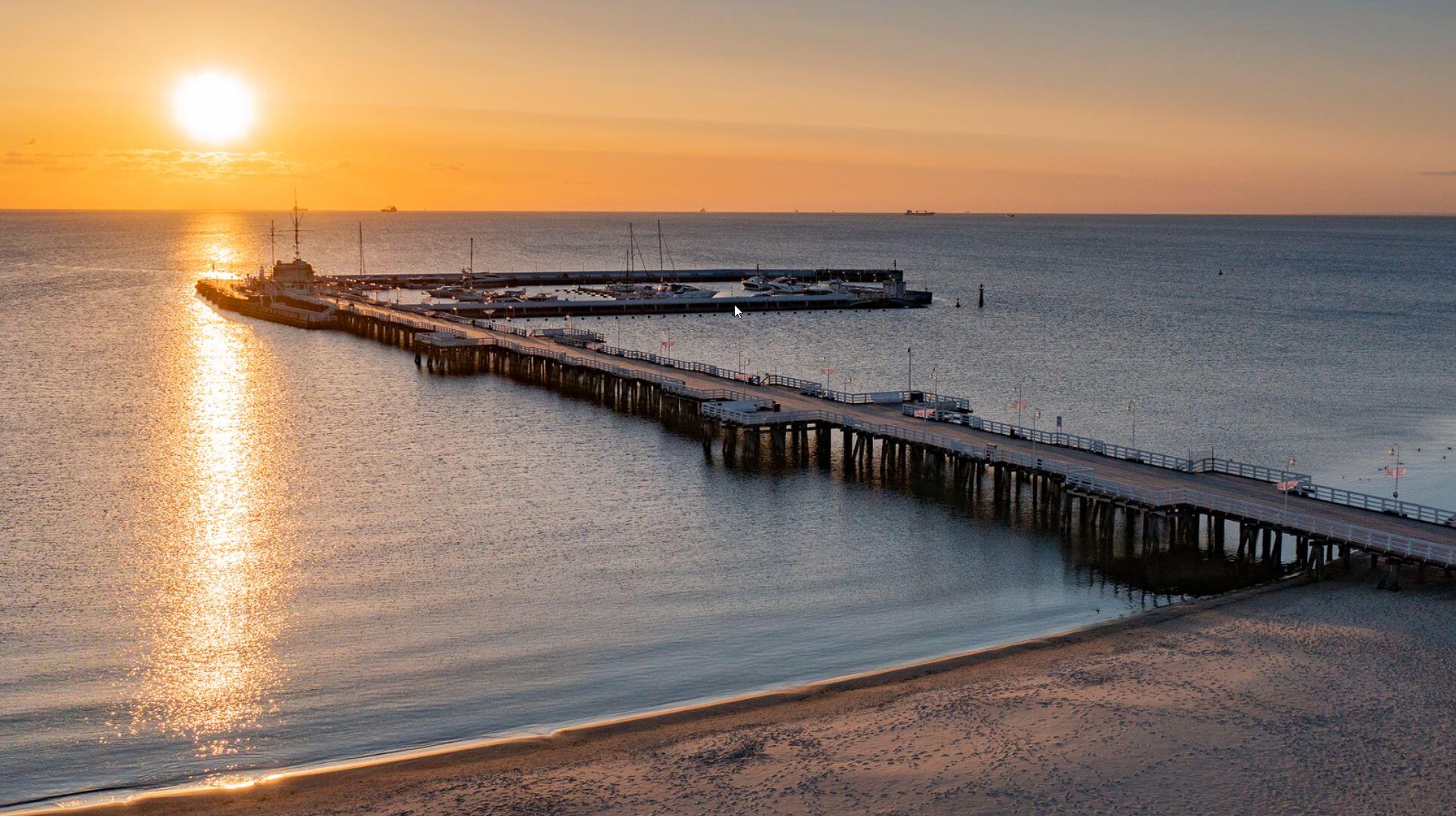
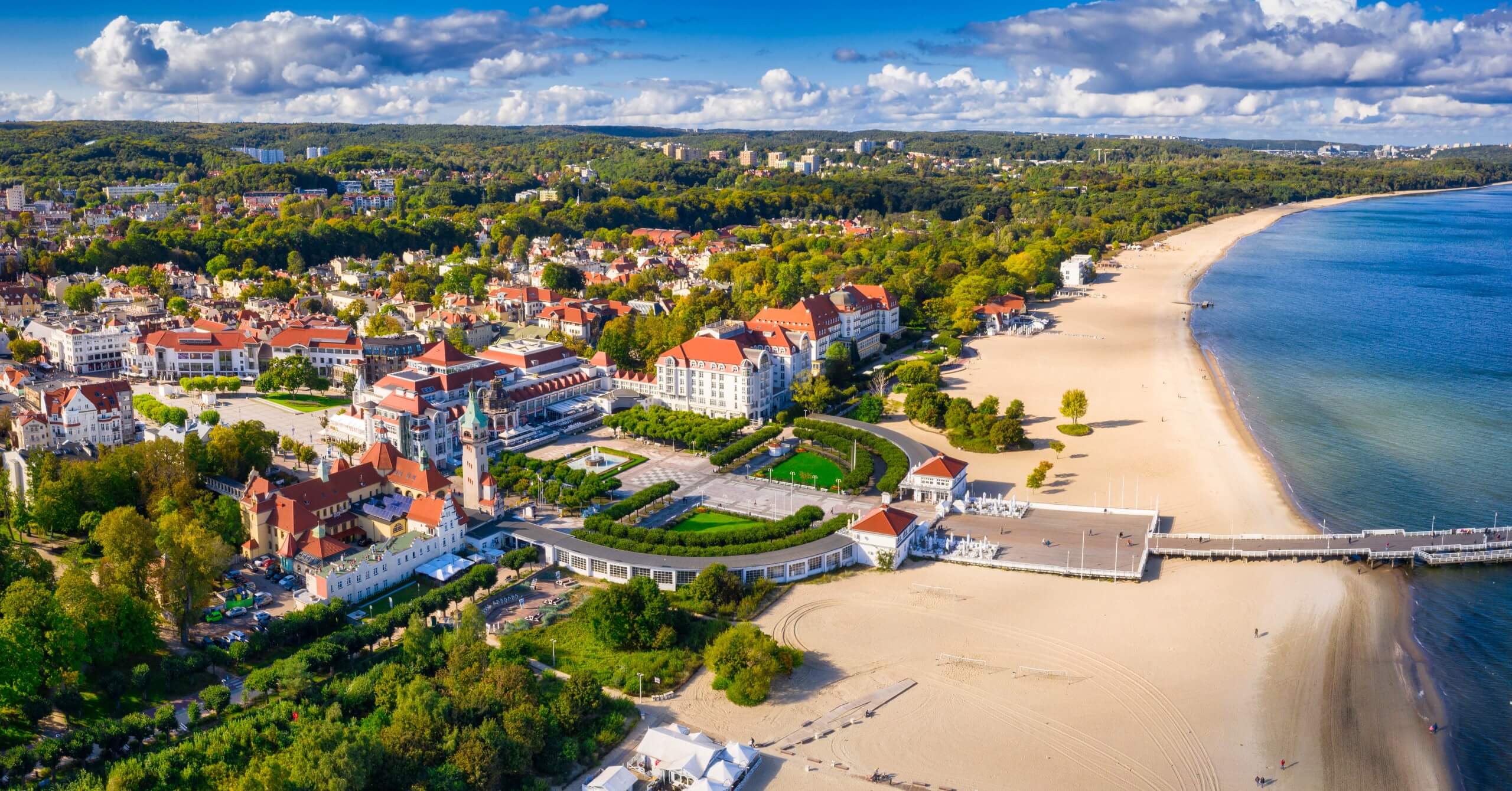
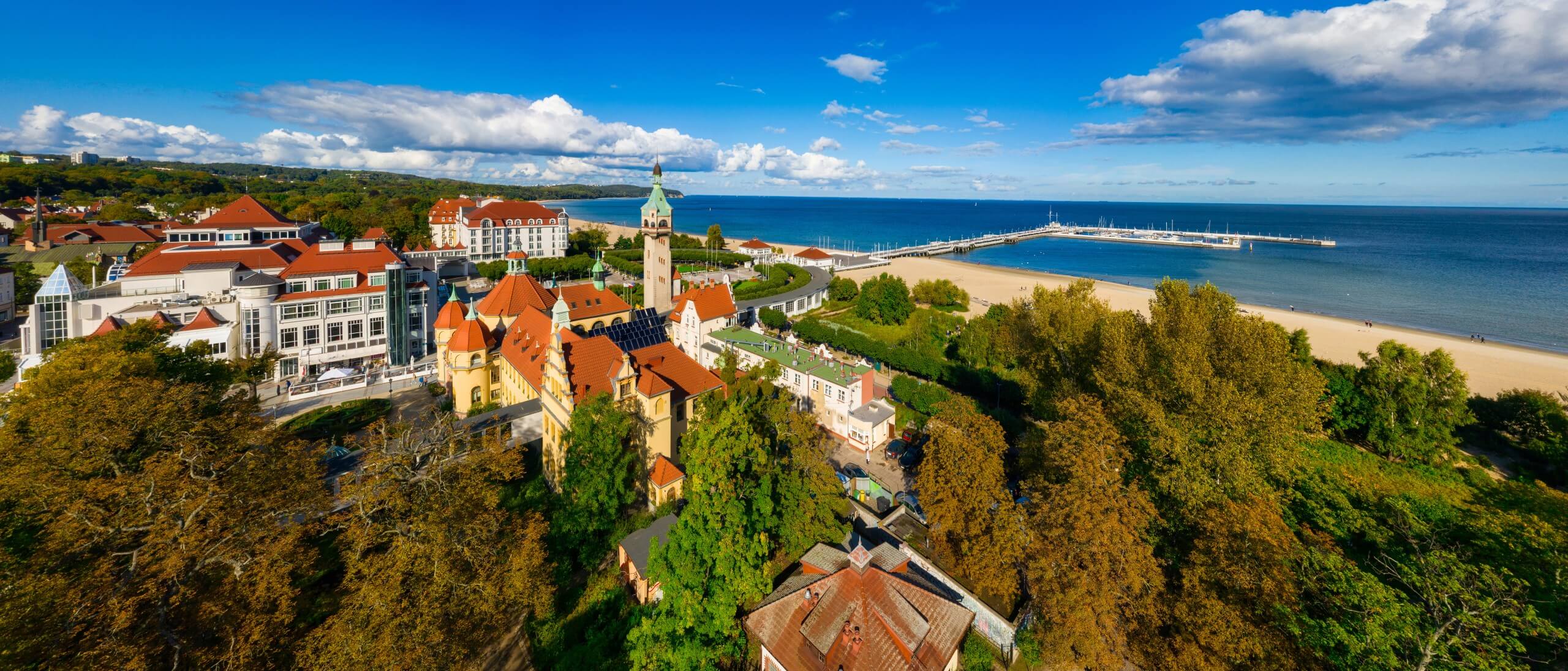
Let us begin honestly, however. Monciak is excellent. Sopot Pier really is the longest wooden pier in Europe, and an August evening in Plac Przyjaciół Sopotu has something that cannot be replicated. The point is that this is only one part of the city, operating at full intensity for several warm weeks of the year.
All of Sopot’s built-up areas occupy less than 39% of its surface. Forests account for 54%, while the remaining 7% consists of parks and municipal green spaces. This is where — throughout the year — the life unfolds that clients searching for premium properties with us usually discover only after moving here. And it is why they stay.
What does a morning look like in a city that has been a health resort for two hundred years?
It begins in the forest. And this is not a matter of preference, but of design.
In 1823, Jean Georg Haffner, an Alsatian surgeon who had served in Napoleon’s army, opened the first bathing establishment in what was then a fishing village. He prescribed three things to his patients: bathing in seawater, boat trips across the Bay to breathe in iodine-rich air, and walks through the forests west of the town. This was not a fashion, but a form of therapy, and the city was designed around it.
Two hundred years later, Sopot returned to that role in a very literal sense. In the summer of 2023, as part of the resort’s bicentenary celebrations, it opened the Coastal Therapeutic Trail. In March 2024, it added the Forest Therapeutic Trail.
The Forest Therapeutic Trail: forest therapy from before the age of mindfulness
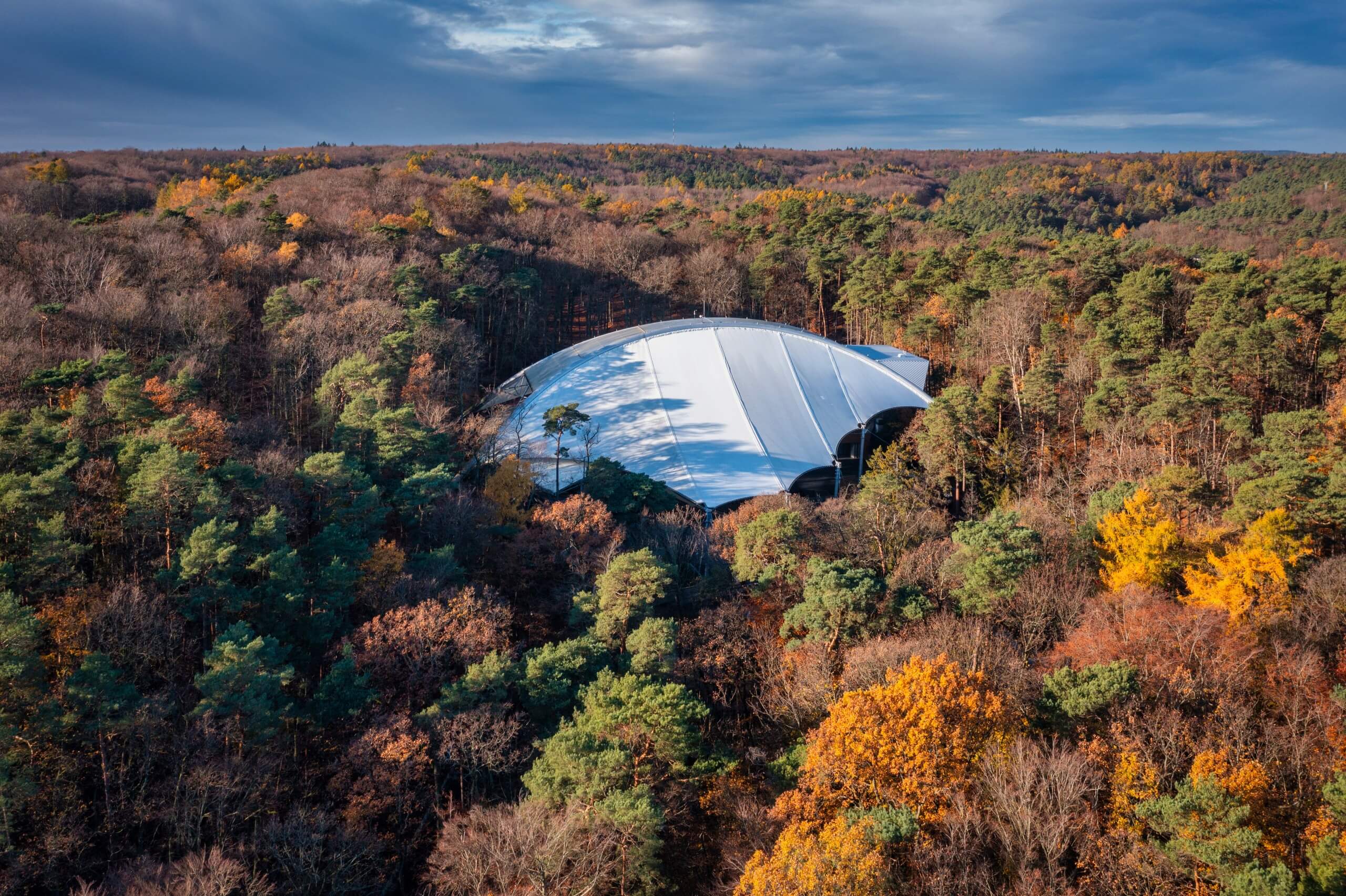
Two loops of comparable difficulty, both beginning by the steps on Moniuszki Street. The shorter route is approximately 1,100 metres long and runs around Morskie Oko. The longer route, measuring approximately 2,200 metres, passes Morskie Oko, circles the Forest Opera and leads through two viewpoints. Exercise equipment has been installed along both routes.
You walk, stop, exercise and continue. The same concept is now marketed in Scandinavia as forest bathing. In Sopot, it was prescribed by a doctor two centuries ago.
The trail also passes through three places worth considering in their own right.
Wzniesienie Strzeleckie: a view absent from the brochures
A viewpoint situated 79.7 metres above sea level, directly beside the Forest Opera and located along the longer loop of the trail. It is reached by climbing the steps from Moniuszki Street and passing the stone bench donated by Sopot’s partner city, Zakopane. The terrace stands on the remains of a water reservoir built in 1910 and decommissioned thirteen years later. In 2020, local residents voted for its revitalisation as part of the Participatory Budget.
The view extends across Sopot and the Bay of Gdańsk. Admission is free, the terrace is open around the clock and, outside weekends, there is rarely anyone else there.
Łysa Góra: a ski slope by the sea
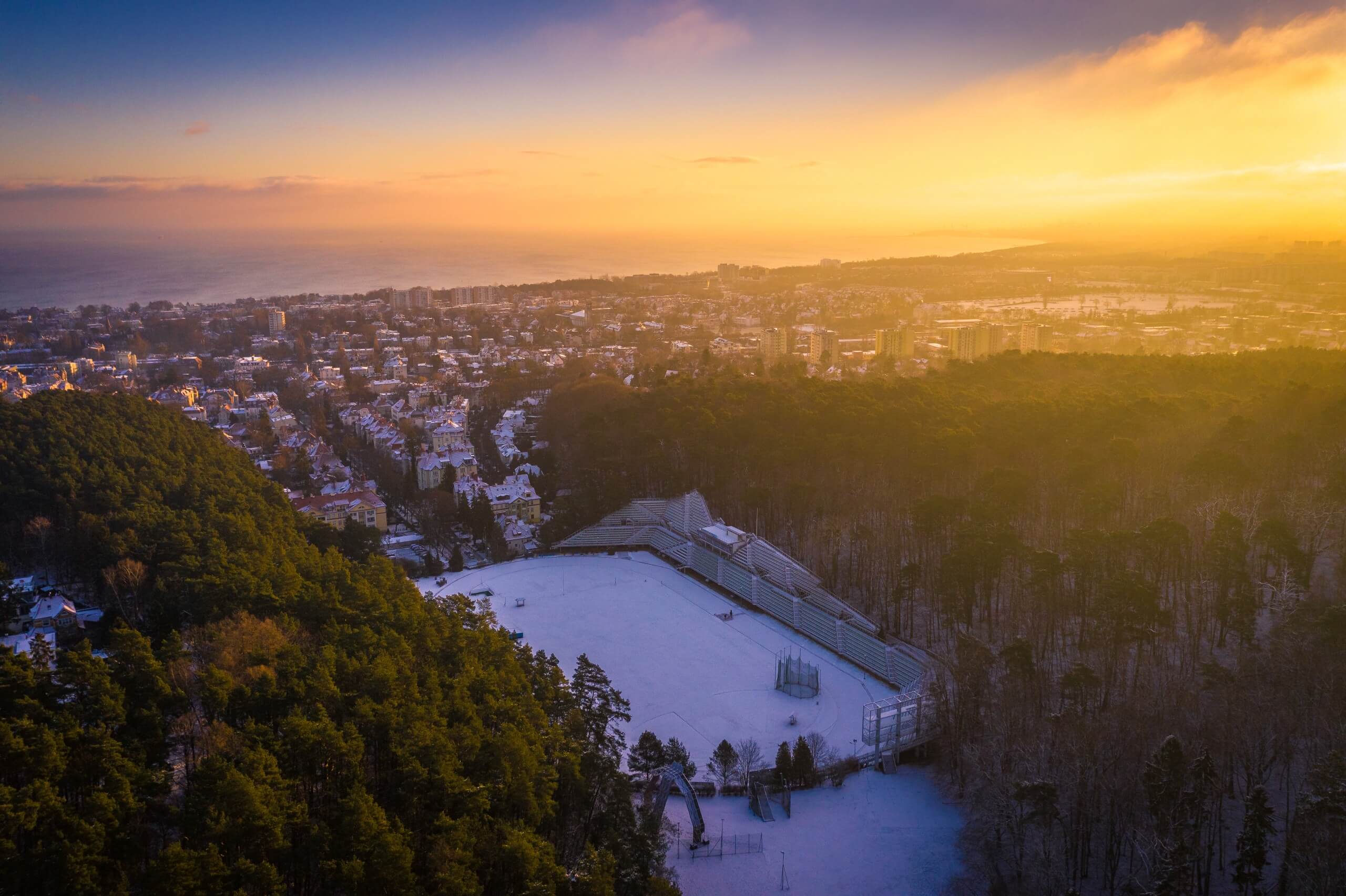
Several hundred metres further on stands Łysa Góra. In winter, it becomes the only ski slope in the Tricity area, with a 286-metre lift, artificial snowmaking, lighting and a ski school for children.
In summer, the slope disappears, leaving what attracts people here throughout the rest of the year: a summit offering panoramic views of the Bay of Gdańsk, Gdańsk and part of the Żuławy region, surrounded by the forests of the Tricity Landscape Park, through which walking and cycling routes run.
Within the boundaries of a single city, you can therefore ski in the morning and walk onto the beach in the afternoon. In summer, you can return to the same hill — no longer for the descent, but for the view.
The area around the Forest Opera: silence just a few dozen metres beyond the stage
The Sopot amphitheatre is known throughout Poland. Few people venture beyond its gates, yet immediately behind them begins the Tricity Landscape Park — almost 20,000 hectares encompassing ten nature reserves. Sopot borders it to the west.
This is why silence begins only a few dozen metres behind the stage on which stars perform in summer.
The Coastal Therapeutic Trail: four kilometres with graduation towers
The second trail leads in the opposite direction: from the Balneological Institute, along Parkowa Street, the coastal path and Karlikowski Forest, to the Sopot Meadows. Four kilometres in total. Along the way, you pass brine graduation towers — in the garden of the Sopot Museum and on the Meadows — exercise equipment, a miniature golf course and bilingual information boards. At each point, they explain how to use the coastal air for health purposes while recalling the history of the resort. This trail does not merely show the way — it teaches you how to take the cure.
In 2025, the city added a wooden boardwalk on the Meadows, benches, bicycle racks and further exercise equipment. Sopot does not treat its health-resort function as a historical relic, but as infrastructure in which it continues to invest.
Seven walking trails, each named after an animal
The Seagull, Squirrel, Roe Deer, Wild Boar, Hare, Fox and Badger Trails. They are marked against a yellow background — a colour chosen deliberately to represent the meeting of Sopot’s sand with the shade of the forest. Six of them run through the forests west of the city, while one follows the shoreline. Their tradition dates back to the Sopot Beautification Society, founded in 1881.
The Squirrel Trail passes through the Zajęcze Wzgórze Nature Reserve — the only nature reserve within Sopot. The oldest pine, beech and oak trees are almost two hundred years old: they were already growing when Haffner opened his bathing establishment. Fallen trees are deliberately left where they lie. The management of the Tricity Landscape Park allows the forest to regenerate naturally, because this stage in the life of a beech forest supports the greatest diversity of species.
This is a neighbourhood, not a destination for an excursion. In Sopot, the forest forms part of the address — including addresses in the premium property segment.
What sustains Sopot when the season ends?
It is possible to love a city in July and be unable to tolerate it in November. A premium property in a resort is purchased precisely for November. August can defend itself.
Sopot makes little noise about what it offers outside the season — and you need to live here for a while to notice it. That six Sopot restaurants were included in the Michelin Guide Poland 2026, in a city smaller than many Warsaw residential districts. That on Tuesdays and Fridays, producers from Kashubia, Kociewie and Żuławy gather at the market on Polna Street, with vegetables displayed only a few hours after being harvested. That tennis courts which once hosted WTA tournaments stand beside the beach, and that the club has an indoor hall with clay courts — meaning that a January training session on the same surface as in summer is not an eccentricity, but an ordinary day.
This is the layer of the city that buyers of luxury properties ask about most frequently — and the one most difficult to assess during a weekend stay.
A prescription that never expired
The Balneological Institute, built in 1903, stands on Plac Zdrojowy, exactly where Haffner’s former bathing establishment once operated. Brine baths are still taken there. The brine comes from the Saint Adalbert spring and flows from the fountain opposite the building.
It is the same prescription that the Alsatian doctor gave to his patients two hundred years ago. The only difference is that today you make an appointment by telephone, in the middle of winter, and walk to the treatment.
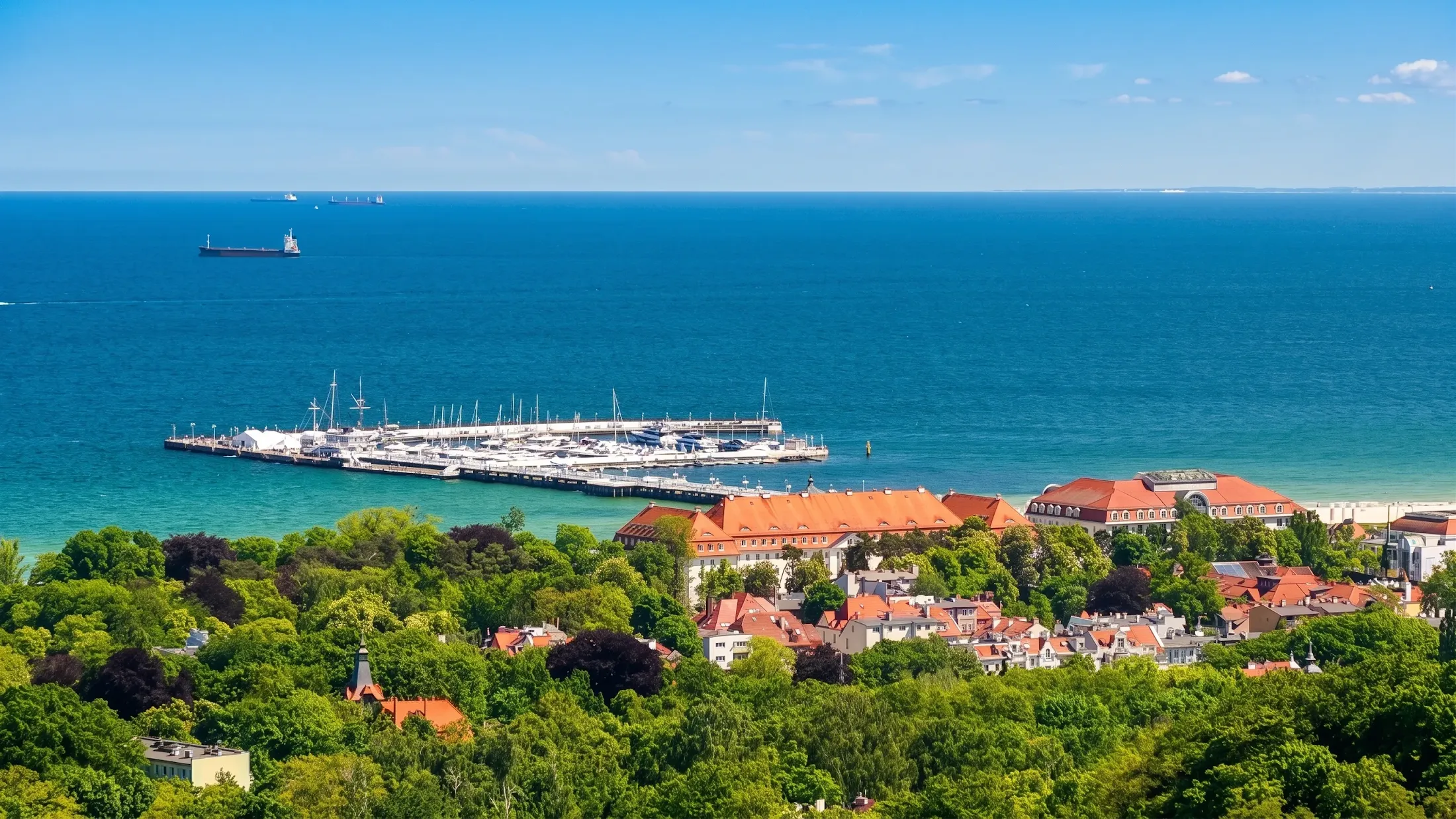
The pier changes in a similar way. In summer, there is a queue at the ticket office; outside the season, what remains is 511 metres of wooden boards above cold water and a handful of people who come precisely for the emptiness. At the very end of the pier is a marina — sailors say it is the most beautifully situated urban harbour on the Baltic.
A villa visited by artists
Goyki 3 Art Inkubator is housed in the Jüncke Villa, built in the late nineteenth century and known for decades simply as “the house with the tower”. Since 2021, artists from Poland and abroad have come here for residencies. A screen-printing workshop and photographic darkroom operate in the basement, the villa is surrounded by a historic park, and the site of the former orangery has been transformed into an illuminated outdoor event space.
The tower is open to visitors.
Several hundred metres away, in the Spa House, the State Art Gallery has presented exhibitions continuously since 1952. Günter Grass, Czesław Miłosz and Sławomir Mrożek have all visited. Neither institution closes in September.
And a street absent from the guidebooks
Obrońców Westerplatte Street, formerly known as Willowa. It runs east of the railway tracks and is divided by a pedestrian bridge crossing the ravine that cuts through the Sopot Escarpment. Residents use it every day to avoid the city centre.
It has never appeared in guidebooks because it is not a monument. It is simply quiet, convenient and attractive — qualities that are not usually marketed to tourists.
What was here before the resort was established?
The answer changes the way the entire city is perceived. Sopot did not begin with Haffner. It began a thousand years earlier — and it already had its name.
The Early Medieval Stronghold: the oldest address in the city
At 63 Haffnera Street, several hundred metres from the beach, stands a reconstructed early medieval stronghold: huts, ramparts and a palisade rebuilt exactly where archaeologists discovered their remains. The settlement, dating from the eighth century, became a fortified coastal outpost around the middle of the ninth century. It burned down three times and was rebuilt twice; it was abandoned at the end of the tenth century, when Piast Gdańsk was beginning to emerge.
Archaeological finds have included pottery, amber beads, iron and bone objects, glass beads obtained through trade and seal bones from animals that once lived in the waters of the Bay. The stronghold was destroyed by fire for the final time in the second half of the tenth century, at approximately the same time as Piast Gdańsk was being established.
Admission is free on Tuesdays. Even then, it is often empty.
Where did the name Sopot really come from?
This is the city’s best-kept obvious fact. “Sopot” does not derive from the German “Zoppot”. It is exactly the opposite: Zoppot is the Germanised form of a Slavic name.
Sopot derives from the Proto-Slavic word sopotъ, meaning a murmuring stream or spring. This is the explanation given by Stanisław Rospond in the Etymological Dictionary of the Cities and Municipalities of the Polish People’s Republic. Professor Hubert Górnowicz of the University of Gdańsk noted that the suffix “-ot” is used in Polish to form words describing acoustic phenomena: łomot, łoskot, grzmot. The name of this city is a record of sound — water flowing over stones.
It first appears in written records in 1283 as Sopoth. Eleven streams still flow through the city today, reaching the Bay through eleven outlets.
Before the resort was established, before the pier was built, before anyone imagined a festival, this place was named after the sound of water flowing from the forest towards the sea. Everything described in this article is a consequence of that name.
Where does the forest meet the sea?
Sopot covers less than eighteen square kilometres and has four kilometres of beach. Within such a small area, the forest and the sea cannot avoid one another. They meet — and nowhere is this more evident than at the Hippodrome and in the Northern Park.
Sopot’s compactness is an advantage. In the luxury property segment, it is rare for forest and sea to be within a single walk of one another.
The Hippodrome: 400 metres from the beach
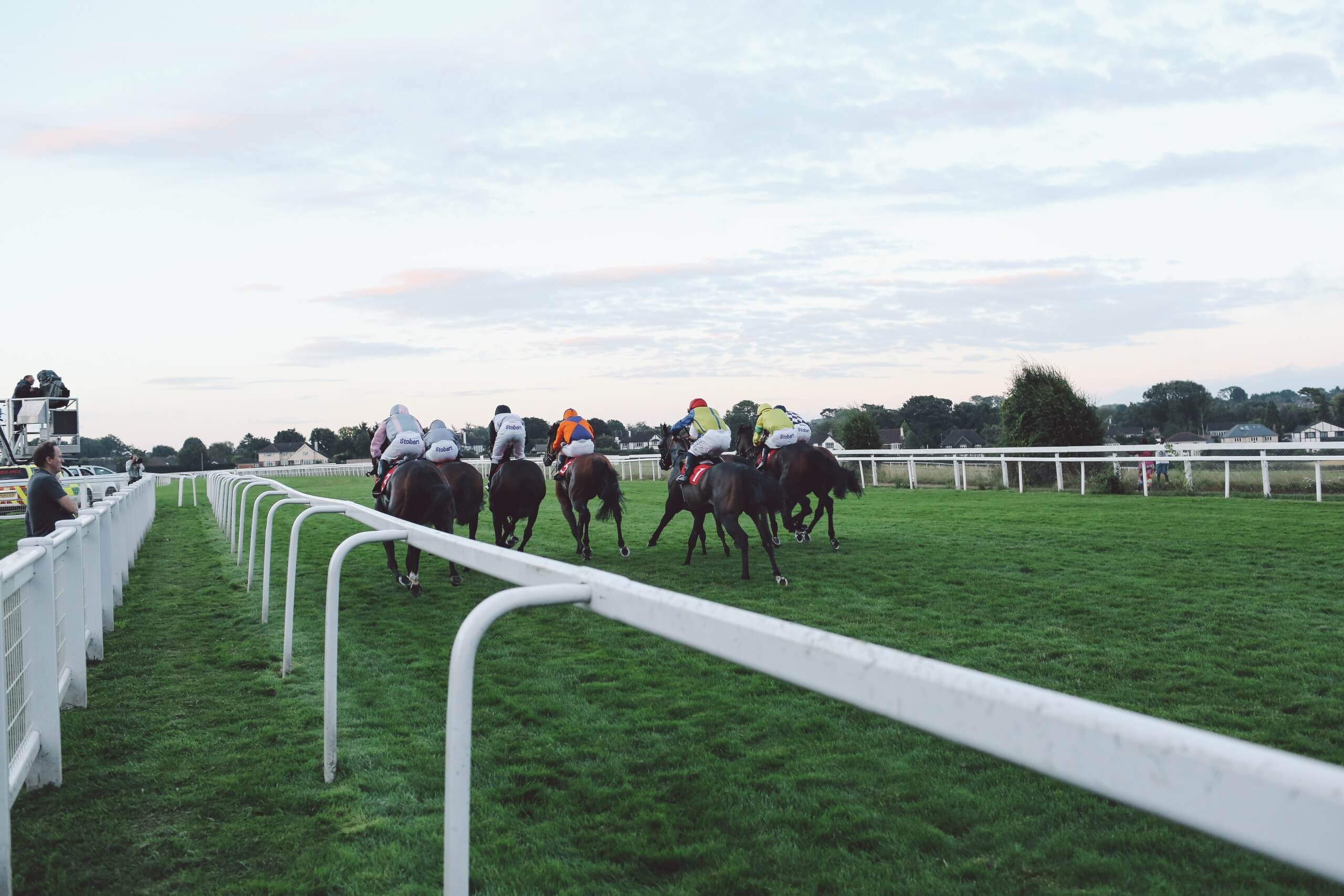
Horse racing has taken place in Sopot since 1898. The grandstands, totalisator hall and racetrack were established at that time, and the course has retained the same shape to this day. The site covers almost 39 hectares, is listed in the register of historic monuments and has stables for approximately 300 horses. It is one of only three racecourses in Poland, and the equestrian season continues throughout the year.
Since 2009, Sopot has hosted the Official International Show Jumping Competition. The June 2026 edition was classified as CSIO4*, offered almost EUR 245,000 in prize money and attracted ninety competitors from around the world. On two occasions, in 2016 and 2021, Sopot hosted the event at the highest five-star level.
The most important figure, however, is another one: 400 metres. This is the distance separating the grandstands from the beach. As a result, Sopot Hippodrome is considered the only equestrian venue in Europe with a view of the sea.
In 1975, Prince Philip, husband of Queen Elizabeth II, competed here. At the time, he was president of the International Equestrian Federation and took part in the European Driving Championships not as an honorary guest, but as a competitor.
Outside competition days, several dozen hectares of open space remain, overlooking the water. People run and walk here.
The Northern Park and the wild beach
The park was established in the first half of the nineteenth century, and the Sopot Beautification Society later transformed it into a coastal park. It extends for approximately two kilometres along the shoreline, from the Grand Hotel to the Swelina stream, which forms the natural boundary with Gdynia. It covers 25 hectares and contains more than sixty species of trees as well as numerous protected plants.
It was the first park in the Tricity area in which paths for pedestrians, cyclists and roller skaters were designed separately and without intersections. The roller-skating track itself is 1,530 metres long.
Everyone knows the southern section of the park. But further north, the park ceases to feel like a park. It becomes a natural wet woodland: woodpeckers, flycatchers and wrens nest there, while protected scarlet elf cups and morels grow beneath the trees. At its edge, the Swelina Ravine opens up.
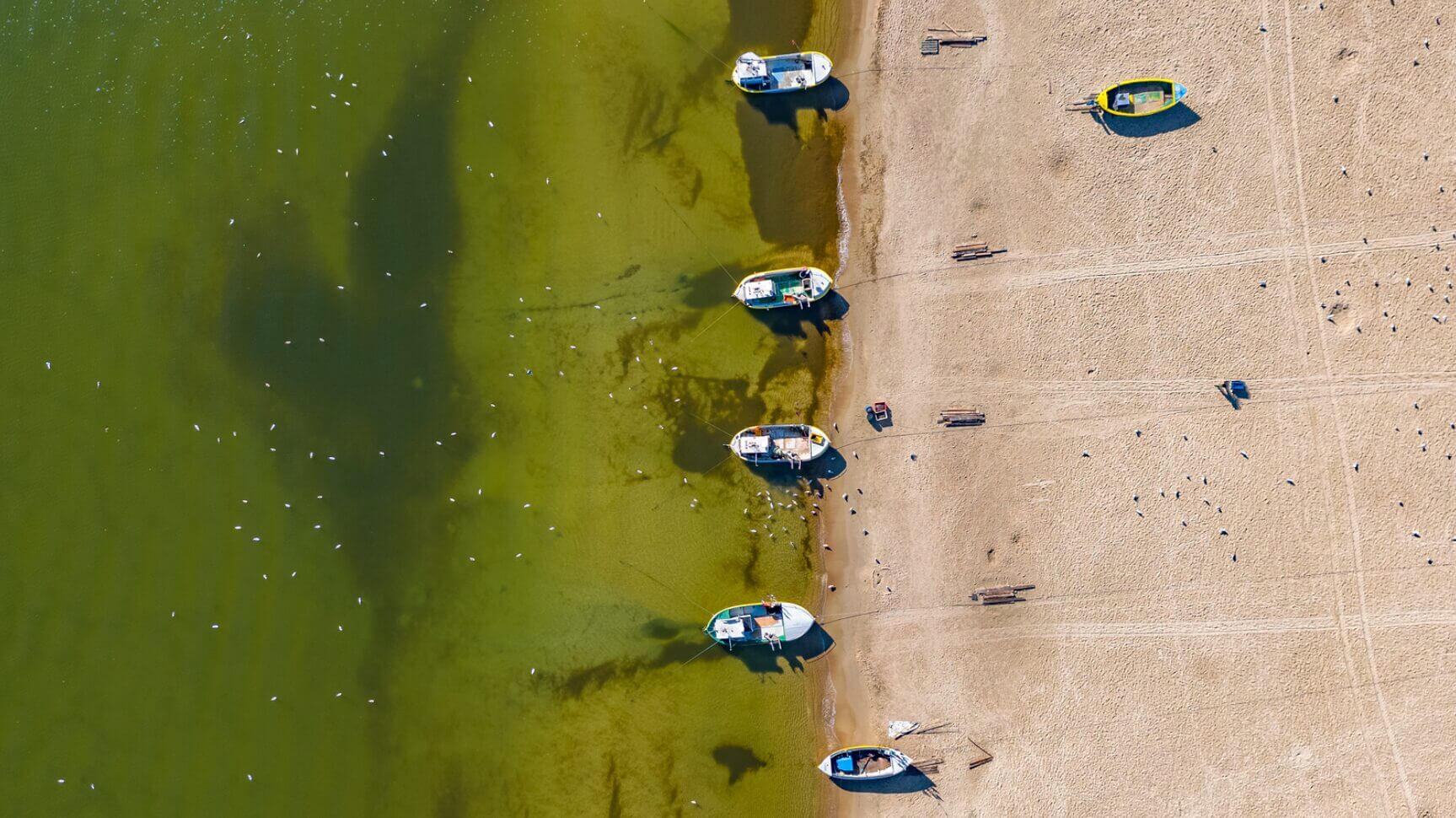
Beach entrances numbered 1 to 10 lead through this area. The descent is narrow and runs between the trees; for a moment, it feels genuinely wild. Then the forest ends and the beach at Kamienny Potok opens before you. It is narrower than the beach further south, more austere and, even at the height of the season, largely empty.
This is where Sopot reveals what it truly is. Not a beach and not a forest, but a place where one becomes the other within the space of a few dozen steps.
Will this Sopot survive the next decade?
This is the question asked by anyone purchasing a premium property with years, rather than a single season, in mind. The answer is not found in a brochure. It is found in legislation.
The whole of Sopot lies within the boundaries of a designated health resort — an area covering 1,723 hectares and divided into health-resort protection zones A, B and C. Zone B, which contains most of the residential development, requires a minimum of 50% green space. In Zone A, covering the immediate coastal strip and the area around the Leśnik Sanatorium, this threshold rises to 65%, and the municipality is legally required to adopt a local development plan for the entire zone. The Health Resort Treatment Act itself prohibits the construction of new residential buildings, retail premises with a floor area exceeding 400 m² and petrol stations, the felling of trees other than for maintenance purposes, and entertainment activities that disturb the night-time peace between 10:00 p.m. and 6:00 a.m. — with one exception: events included in the municipality’s official calendar.
A city commonly associated with nightlife has legally protected night-time tranquillity in its most strictly controlled zone — and noise is permitted there only when the city deliberately places an event in its calendar. The Act does not permit new single-family or multi-family residential buildings in Zone A; the only exception concerns detached houses on land to which rights were acquired before the legislation entered into force, meaning before October 2005. The residential supply in Sopot’s most strictly protected coastal area is therefore limited not by a developer’s decision or the economic climate, but by law.
In the luxury property market, this is rare: the exclusivity of an address is determined by legislation, not marketing.
This is not merely a legal curiosity. Green space in Sopot is not a developer’s promise — it is a statutory threshold, meaning that the view from your window has a far greater chance of remaining unchanged over the next decade than in a resort without such protection. In premium real estate, one purchases not only square metres, but also the confidence that the surroundings will remain as they are today.
Premium properties in Sopot: what this means in practice
When choosing Sopot for a holiday, you purchase the beach and the pier. When purchasing a premium property here permanently, you gain something entirely different: forests covering more than half the city, six Michelin Guide restaurants within easy reach, an indoor clay court for January, brine from the Saint Adalbert spring, a hippodrome instead of a gym, a market instead of a supermarket, eleven streams and a statutory threshold for green space.
And the sea, which can be reached on foot from every one of these places.
Our advisers live in the Tricity area, specialise in premium properties in the region and know these addresses from their own daily lives. Before we begin viewing individual properties, it is worth establishing something simpler: I would like to arrange a conversation about which part of Sopot best suits my rhythm of life.
Your home begins with the sea. In Sopot, it also begins with the forest.